
Secure Code Training for the Age of AI

A complete secure code training program for developers
Understand where your developers are, train them on what they build, keep them engaged, and prove the impact to leadership.
Understand your developers' needs
Gain clear visibility into your development team's experience, security knowledge and real-world coding behavior, so training goes where it matters most.
-
Learner Profiles capture experience, languages, frameworks, and day-to-day security exposure.
-
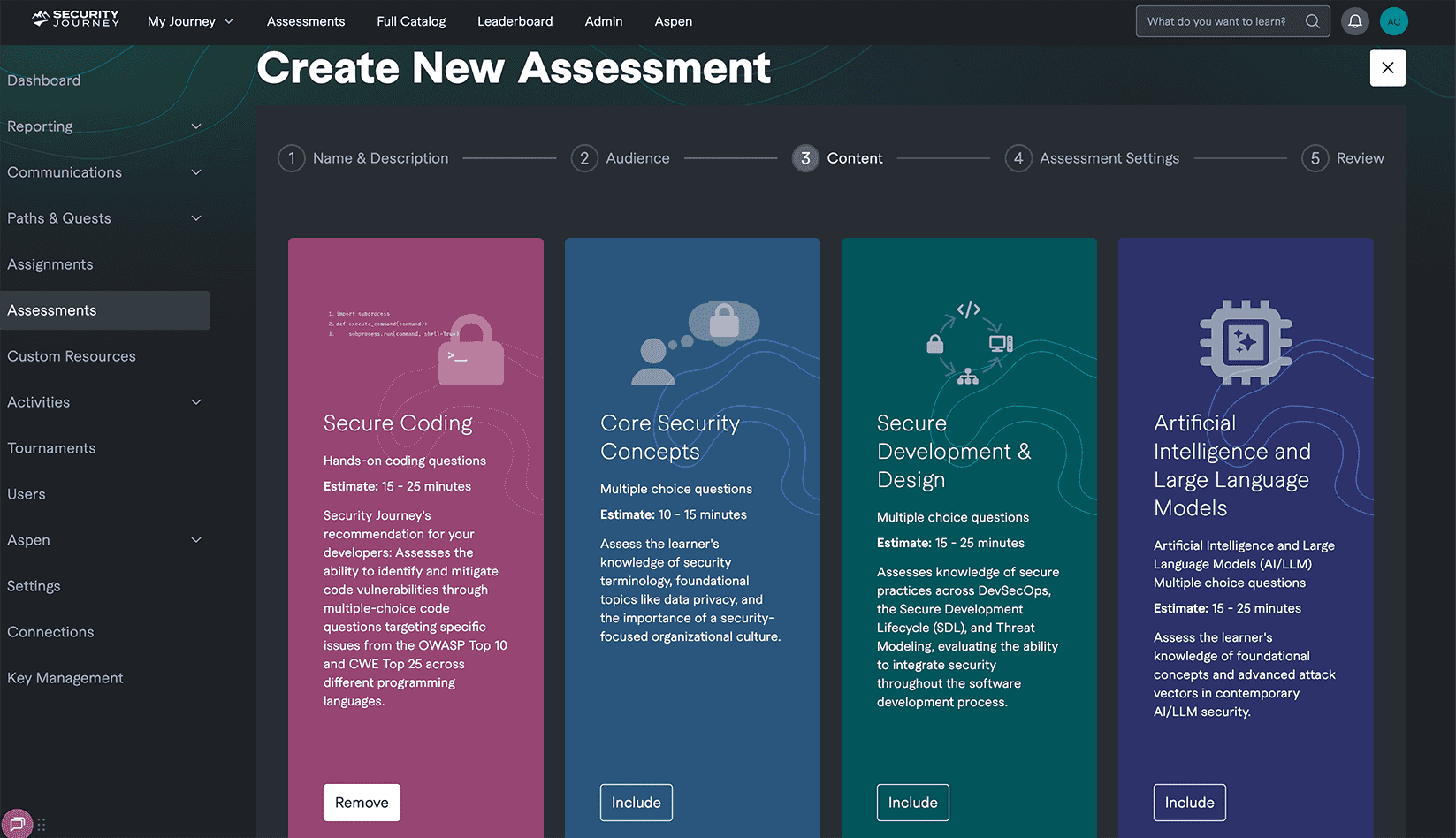
Knowledge Assessments baseline four areas: secure coding, core security concepts, secure development and AI.
-
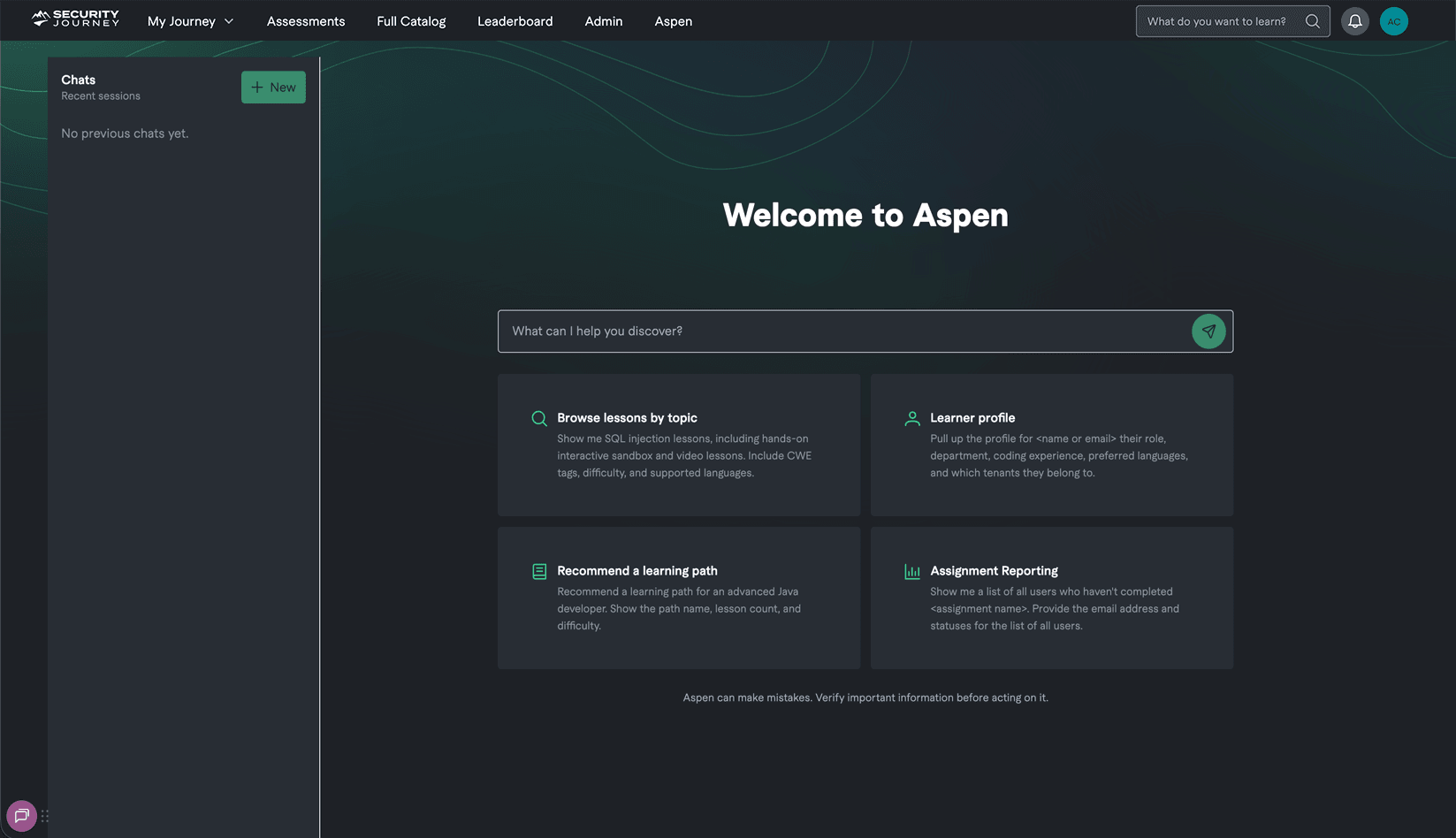
Aspen: Adapt turns CWE findings from your scanners into training assignments automatically.
Deliver the right training at the right time
Over 1,000 lessons across more than 45 languages, technologies and frameworks — built around hands-on practice rather than slideware.
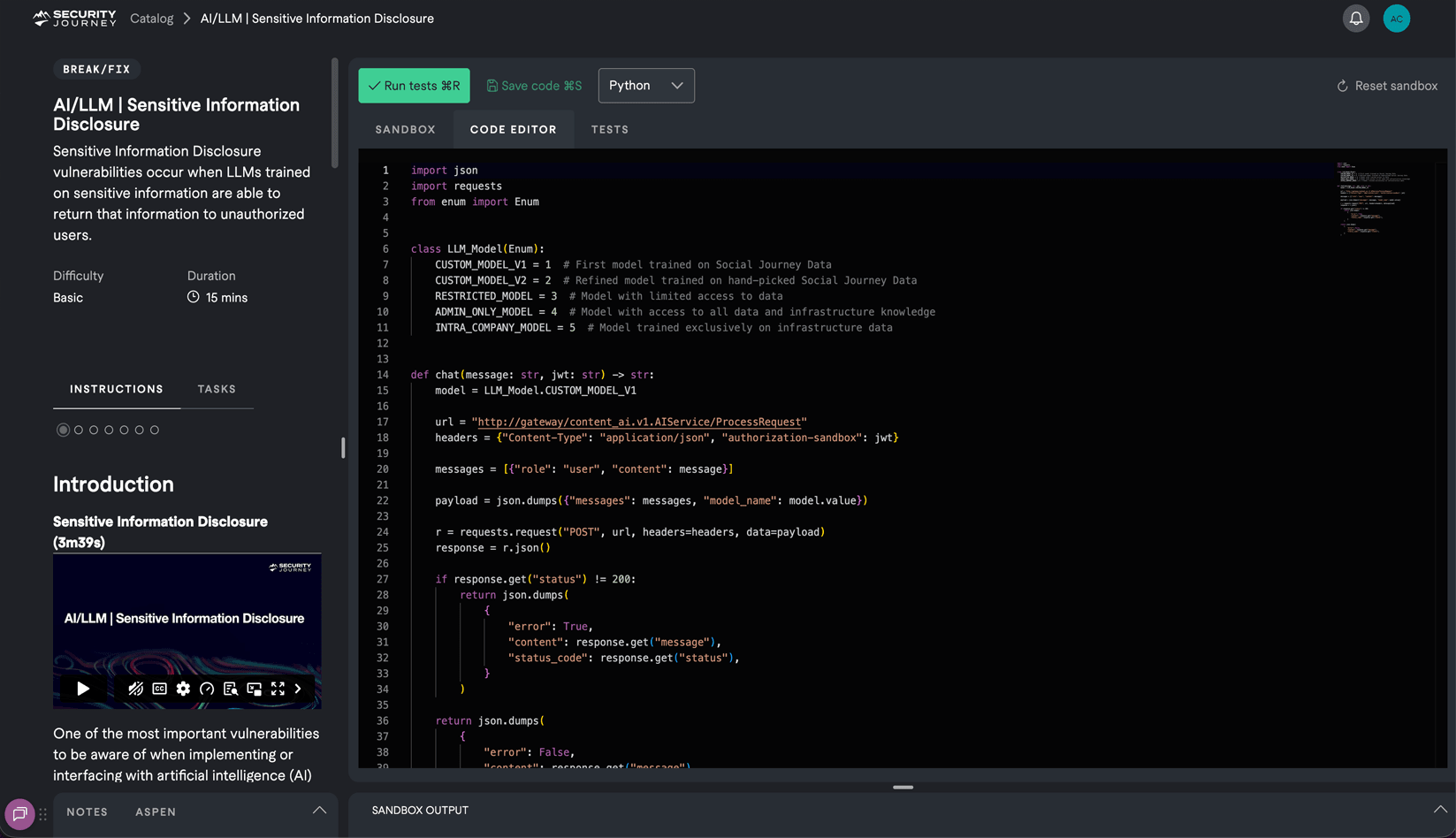
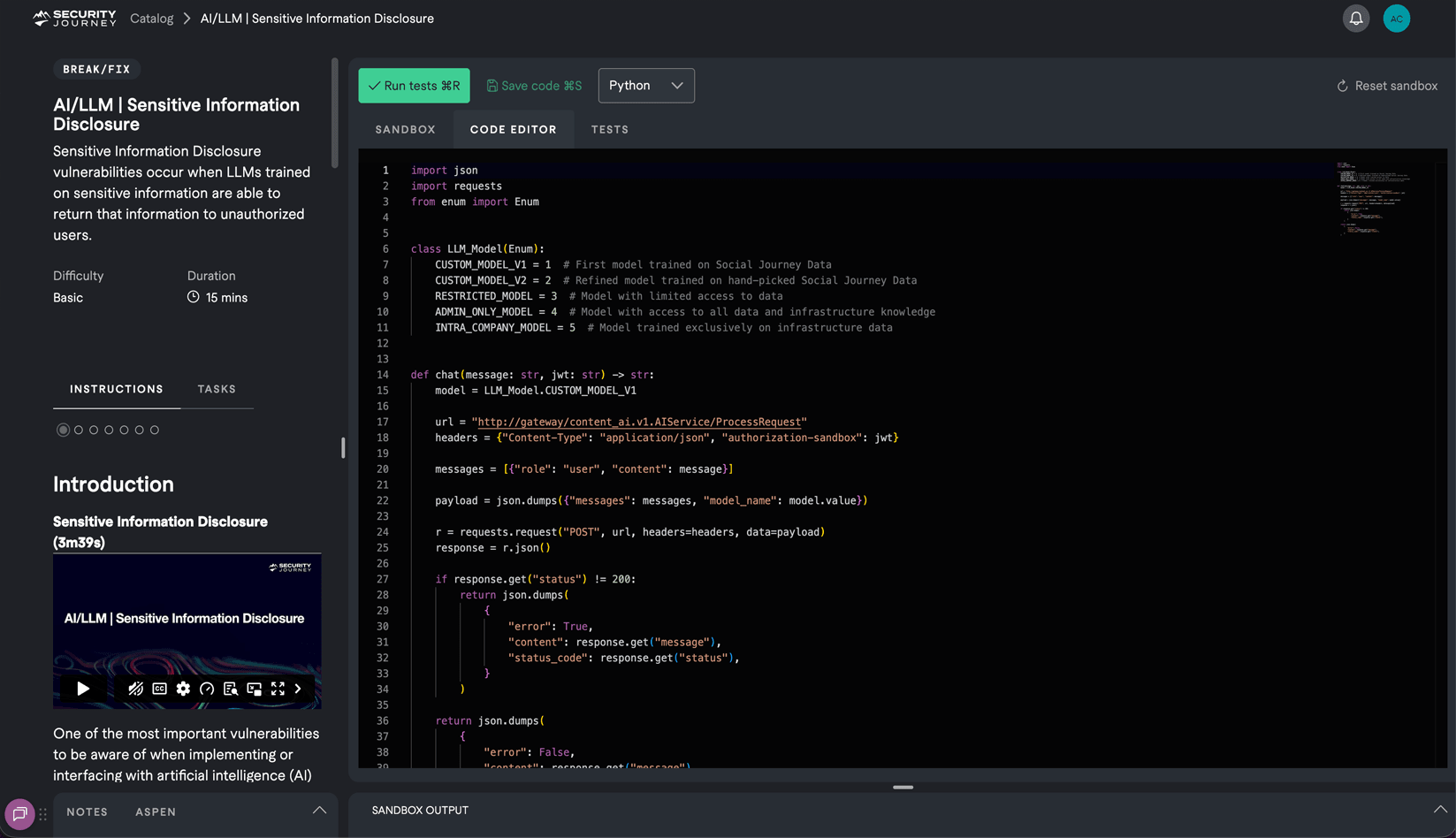
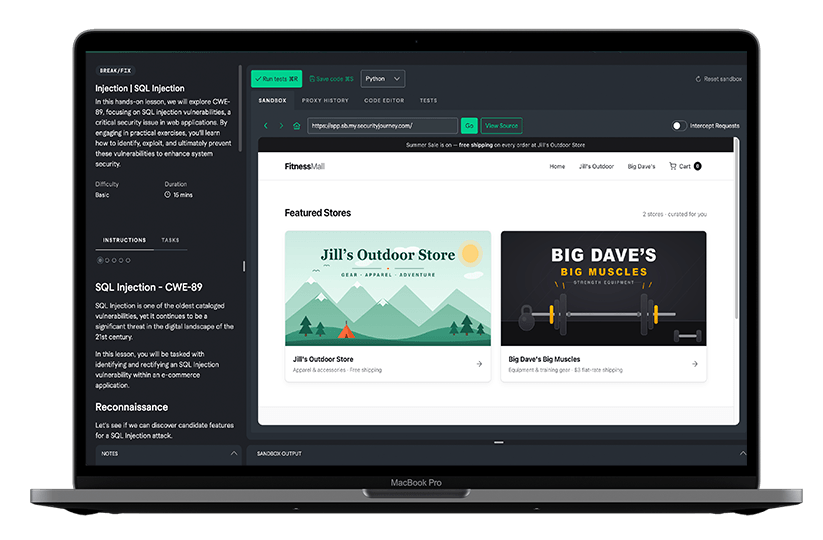
- Break/Fix - Take both the attacker's and defender's seat in a live sandbox.
- Coding Challenges - Work against vulnerable source code in the language you ship in.
- CTF Challenges - Graded capture-the-flag exercises that stretch attack-strategy knowledge.
Build guardrails into AI-assisted development
AI coding assistants increasingly decide which patterns get repeated across a codebase. Aspen: Guardian AI keeps those patterns aligned with your secure coding standards.
- Analyzes SAST findings from your CI pipeline to identify recurring, high-impact vulnerability patterns.
- Updates your existing AI rule files through reviewable pull requests — transparent and version-controlled.
- No source code is ever sent. No runtime enforcement. No replacing the assistants your developers already use.
Turn training into lasting behavior
The goal was never just to teach concepts — it is to change how people build software, which means habits, behavior and measurable progress.
-
Tournaments that focus effort on priority risk areas with lesson and exercise-based competitions.
-
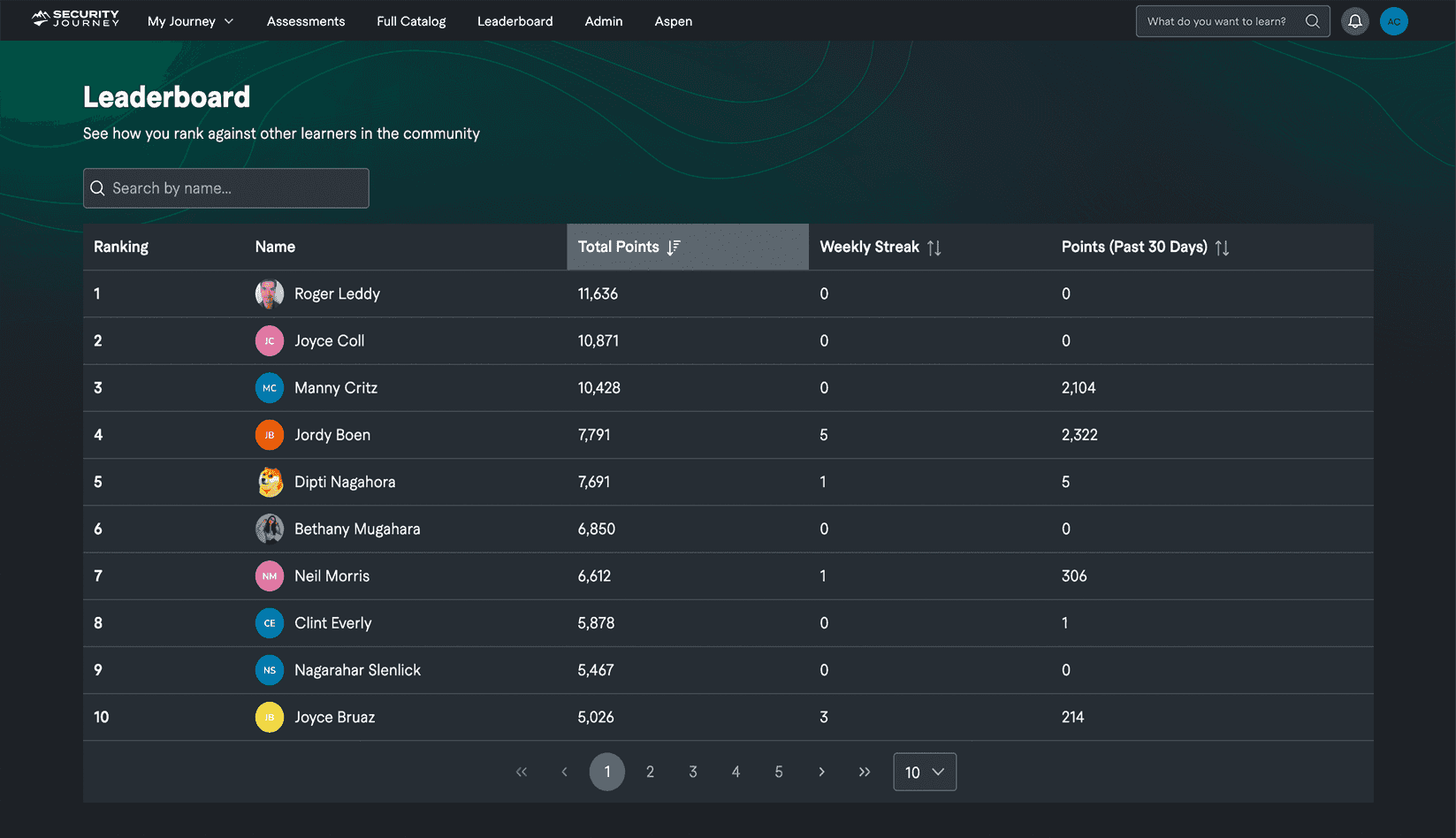
Leaderboards showing points collected, participation streaks and learner level in a single view.
-
Certificates & Champion Passport for structured security champion development.
Administer, measure and prove impact
Manage learners, automate assignments and track progress across teams, with reporting built for security and leadership audiences alike.
-
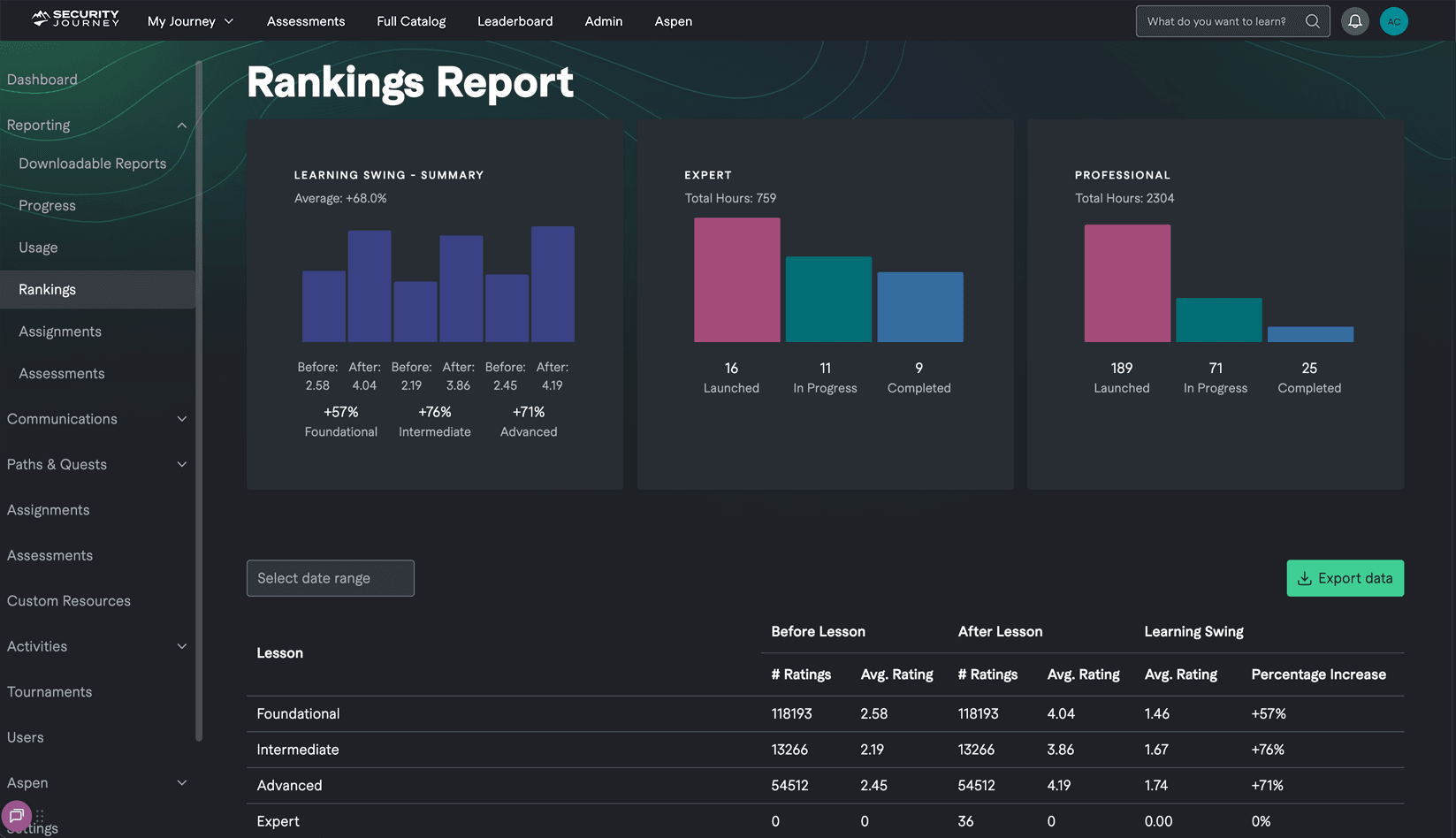
Learning Swing measures knowledge gain from a learner's own rating before and after each lesson.
-
Assessment reporting with proficiency filtering, individual detail and exportable data.
-
Team-based assignments, notifications and platform theming to match your culture.
Want to see how this works for your team?
Walk through the platform with someone who can answer your specific questions.
Start with SQL Injection — no sales call required
Begin with the background on injection, SQL injection and SQL syntax, then move into the hands-on portion and fix the vulnerability yourself.
Training that responds to your real code
Train the developer
Correct the assistant
HackerOne Transforms Secure Coding Training Into a Developer‑Led Culture
"By partnering with Security Journey, HackerOne reframed training from a requirement into a visible, energizing part of engineering culture. The result: stronger participation, renewed curiosity, and a program that now scales across ~100 engineers."
Built to pass your own security review
SSO and SAML
SCIM Provisioning
SOC 2 Type II
Accessibility
Whatever your pipeline runs on
Our always-growing catalog of lessons includes today's most relevant languages and technologies.
Programming Languages
Applications & Technologies
Short, focused paths that stand up to an audit
OWASP Top 10
OWASP Compliance Path
PCI DSS 4.0
PCI Compliance Path, built to the secure code training requirements in PCI DSS 4
Executive Order
Executive Order Compliance Path for the Nation's Cybersecurity
ISO 27001
ISO 27001 Compliance Path
We're here to help
In the platform
-
In-lesson AI help from Aspen: Assist
-
In-platform support chat for admins and learners
-
An extensive, up-to-date knowledge base
Your success team
-
A dedicated Customer Success Manager
-
Security Champion and mentor guidance
-
Onboarding, rollout and engagement best practices
Secure Code Training FAQs
What Is Secure Coding Training?
Secure coding training focuses on teaching developers how to create software designed with security in mind rather than trying to patch vulnerabilities after they have been discovered. The most effective programs blend concise, practical lessons with hands-on labs that simulate full applications and not just code snippets.
Developers learn to find and fix vulnerabilities in realistic environments, gaining skills they can apply immediately. A strong secure development culture starts by embedding secure coding practices early in the development lifecycle.Security Journey's Secure Code Training personalizes learning by role and experience level, updating lessons monthly to reflect new frameworks and threat trends. It aligns content with standards such as PCI-DSS 4.0,, and NIST SSDF, ensuring relevance and compliance. This secure coding education is a foundational component of any modern AppSec program.
Teams that can adopt this approach tend to reduce vulnerabilities, shorten remediation cycles, and create a proactive security culture that makes all the difference. To explore real examples, visit the AppSec training library and consider joining Security Journey’s Secure Code Training for easy-to-digest lessons that would pave the way to building safer applications and grow a reliable pipeline of security champions. Creating a security first mindset across teams helps protect against evolving threats and strengthens long-term outcomes.
What Should I Look For in a Secure Coding Training Platform?
- Hands-on labs with complete application environments, not isolated code snippets.
- Role-based, leveled learning paths tailored to developer experience and stack.
- Assessments that benchmark skills, recommend lessons, and track improvement.
- Enterprise support, including SSO/SAML, SCORM/LMS, APIs, and reporting dashboards.
- Regular updates aligned with the OWASP Top 10 and emerging threats.
A comprehensive suite of training tools enhances adoption and long-term program effectiveness. A strong vendor supports a program rollout with human guidance, evident milestones, and internal security champions. You should also request demos showing how labs map to your tech stack and how dashboards connect learning data to reduced vulnerabilities. Providing students with interactive environments encourages learning and long-term retention. A platform that combines measurable progress, scalability, and human support turns training into a true security transformation. The ability to assess individual and team-wide progress is key to ongoing performance.
How Long Does Secure Coding Training Take to Complete?
A typical rollout starts with 4–8 hours of foundational training, followed by monthly refreshers and targeted labs tied to new frameworks or vulnerabilities. Security Journey structures learning paths from Foundational to Intermediate and then to Advanced, with monthly content updates and analytics that track progress. For development teams looking to improve quality and reduce risk, secure software development must become a daily habit.
The goal isn't to just finish training, but to embed security awareness into everyday development. Consistency matters more than intensity—small, regular practice leads to stronger retention and measurable improvement in code quality.
What Are the Best Secure Coding Training Platforms in 2025?
Security Journey stands out with full-application sandboxes, Developer Security Knowledge Assessments, and the Security Champion Passport program that reinforces culture and skill retention. Its customers, including Zoom, report faster remediation and proactive vulnerability prevention. Integrating techniques such as threat modeling into lessons gives developers a deeper security perspective.
When comparing vendors, always ask to see:
- A sample lab in your programming language.
- An assessment report showing skill baselines.
- A dashboard connecting training metrics to vulnerability trends.
The platforms that demonstrate clear, measurable risk reduction and not just compliance are the ones worth investing in.
Does Secure Coding Training Meet PCI DSS 4.0 Requirements?
Security Journey offers a PCI Compliance Learning Path covering OWASP Top 10 topics, threat modeling, and secure design, with certificates and reporting suitable for audits. Assessments validate that developers understand and can apply security principles. This proves that secure software development is more than just a checkbox—it’s an active process.
The platform's dashboards and exportable data simplify compliance tracking, while monthly refreshers keep knowledge current. This ensures readiness year-round, not just before audits.
How Do I Get Developers to Complete Secure Coding Training?
Learning paths should align closely with individual roles, experience levels, and technology stacks, ensuring relevance and engagement. Assessments play a critical role: they should benchmark proficiency, offer targeted recommendations for improvement, and facilitate progress tracking. The right program helps close the gap between theoretical knowledge and practical implementation.
Enterprise readiness is equally important, encompassing support for SSO/SAML, SCORM/LMS compatibility, APIs for system integration, and administrative dashboards for monitoring engagement and outcomes. Regular content updates synchronized with industry standards like the OWASP Top 10 and emerging threats ensure training remains current and effective. Ultimately, these programs empower developers to protect both the organization and its users. This combination equips developers with applicable security skills tailored to their contexts, supported by robust tools for organizational implementation and growth. Organizations that achieve high completion rates report fewer incidents and stronger code quality.
Security Journey's approach supports buildingSecurity Champions who mentor peers, fostering intrinsic motivation and peer accountability. Developers complete training because it helps them code faster, fix issues earlier, and earn recognition for improving security quality.
What Topics Are Covered in Secure Coding Training?
Typical topics include:
- Input validation, API security, and dependency management.
- Logging, monitoring, and incident response.
- Threat modeling and secure design.
- Authentication, session management, and cryptography basics.
- Cloud, container, and Kubernetes security.
Security Journey offers 800+ lessons combining hands-on labs and theory, with monthly updates that reflect current threats like API abuse and LLM-related risks. Labs map directly to common vulnerabilities, ensuring that time spent learning leads to fewer issues in production.
How Do We Measure the Effectiveness of Secure Coding Training?
Security Journey's Developer Security Knowledge Assessments benchmark four domains—Secure Coding, Secure Development, AI-LLM, and Core Security—and visualize progress through dashboards. Reporting correlates training completion with vulnerability reduction, giving CISOs and VPs of Engineering tangible ROI proof.
Quarterly reviews of these metrics help align learning goals with AppSec objectives, proving that secure coding training drives measurable risk reduction.
Can Secure Coding Training Integrate With Our Existing Tools?
Secure development roots, extended to the age of AI
Security Journey is not a generic AI training company. We come from secure development training, where the goal was never simply to teach concepts but to change how software gets built. That same approach now reaches beyond developers with AI Advantage, our AI training for every team.