

Skip to content

Developer Engagement

Keep Developers Engaged in Secure Coding

Developer engagement turns secure coding training into sustained behavior change. Security Journey supports engagement through reinforcement, recognition, and measurable participation, helping organizations drive adoption, maintain momentum, and build secure development practices that last. 

Thoughtful software developer reviewing code on a desktop monitor in a low-light workspace.

Why Developer Engagement Matters

Developer security training only creates real impact when development teams actively participate and turn secure coding knowledge into daily practice. Without strong engagement mechanisms, learning becomes sporadic, progress is hard to measure, and security initiatives quickly lose momentum.

Security Journey’s engagement capabilities help organizations: 

  • Increase training adoption across the SDLC 
  • Reinforce secure coding concepts beyond initial completion 
  • Motivate consistent participation without manual follow-up 
  • Identify high-engagement learners and potential security champions 

 

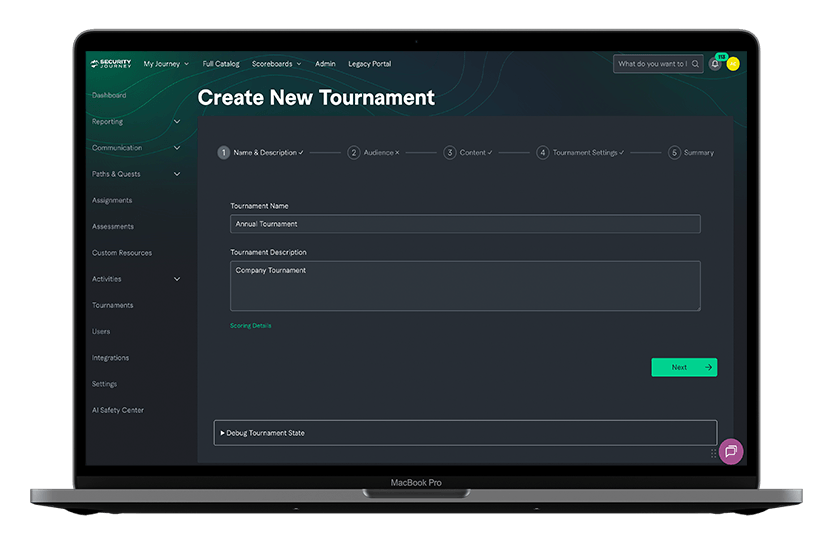
Security Journey Platform Tournament

Tournaments: Drive Participation Through Gamification

Tournaments introduce structured competition to increase engagement and accelerate learning without disrupting development workflows. 

Lesson-Based Tournaments
Focus engagement on specific topics or risk areas by grouping lessons into competitive events. This helps teams align learning around priority security concepts. 

Exercise-Based Tournaments
Reinforce learning through hands-on coding challenges that require learners to write, analyze, and evaluate code—turning knowledge into practical skill.
Security Journey Platform Leaderboard

Leaderboards: Make Engagement Measurable

Leaderboards give program owners clear visibility into learner participation and progress, making it easy to measure engagement with secure coding practices, reinforce secure code adoption, and identify where support is needed across the software development lifecycle.

In a single view, administrators can compare: 

  • Points collected 
  • Participation streaks 
  • Learner level 

Leaderboards also help surface high-engagement learners who may be well-suited for deeper security involvement. 

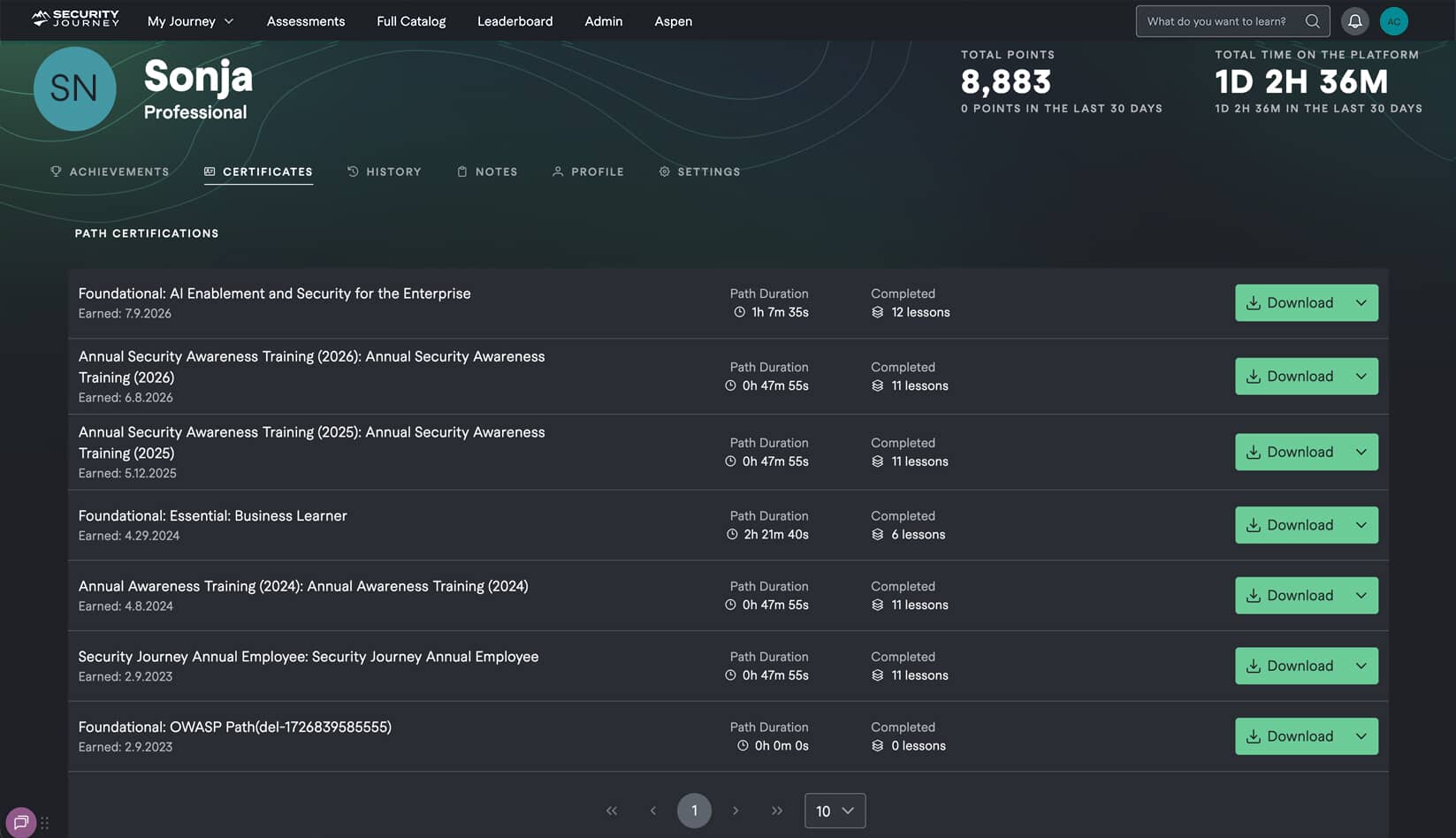
Certificate of Security Achievement awarded to a developer after completing a secure coding learning path.

Certificates: Reinforce Progress and Achievement

Certificates are issued at the completion of learning levels to acknowledge effort and progress. They provide a clear signal of achievement, help sustain motivation, and make learning milestones visible across teams.
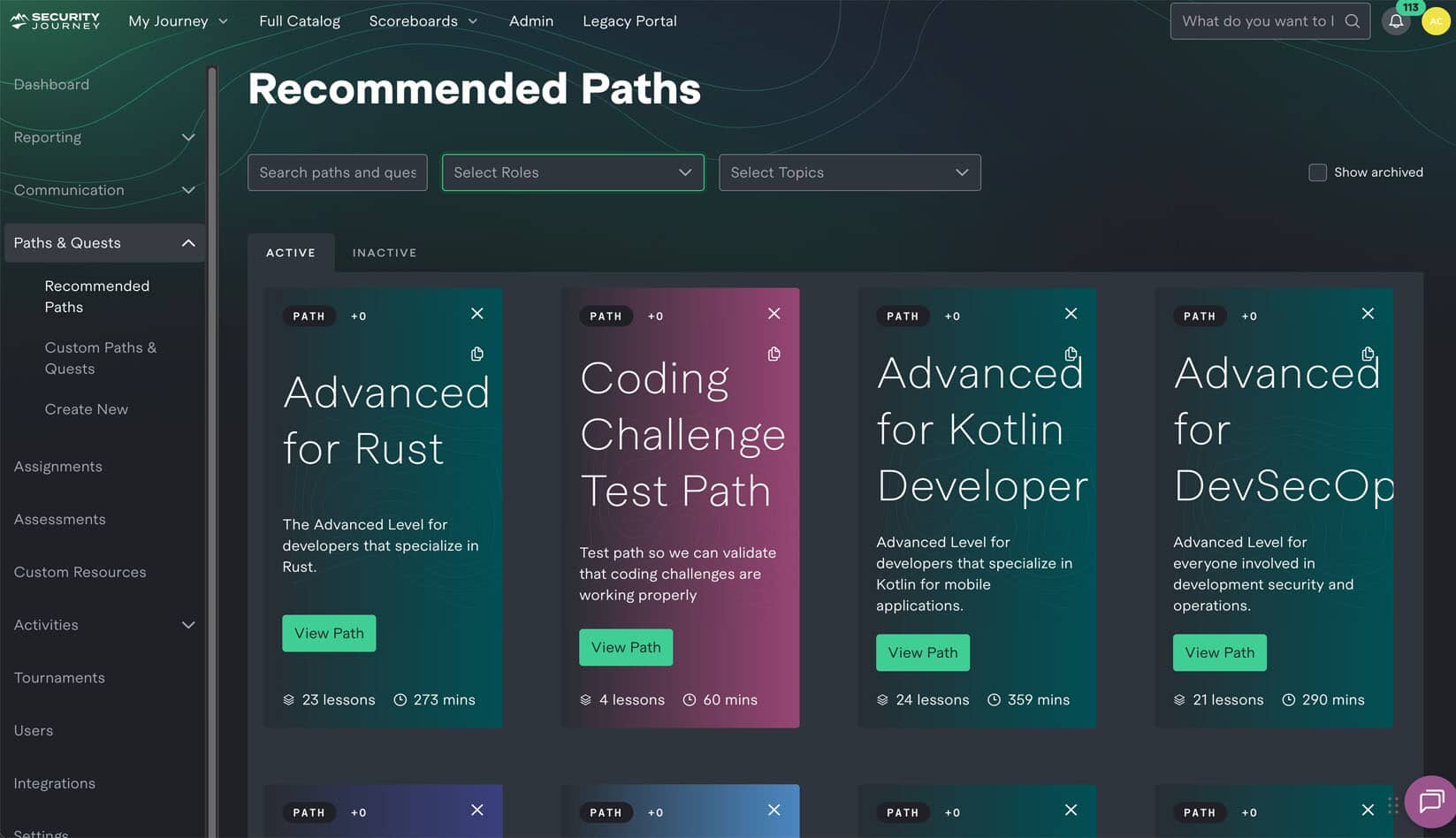
Role-based secure coding learning paths dashboard showing progress for different developer technologies.

Champion Passport: Develop Security Champions with Structure

Developer engagement also plays a critical role in building effective security champions programs. 

Security Journey’s Role-Based Learning Paths establish a shared security foundation across the SDLC while helping identify developers ready for additional responsibility. 

The Champion Passport provides structure for developing these individuals by enabling organizations to create personalized activities through a guided setup process—supporting mentorship, accountability, and program scalability. 
Interactive secure coding lesson interface with code editor used for hands-on security training and real-world practice.

Reinforcement: Support Real-World Application

Security Journey supports ongoing reinforcement and engagement by enabling learners to: 

  • Create notes within lessons for future reference 
  • Access additional lesson series that introduce fresh content on critical security topics like OWASP Top 10
  • Access continually expanded and updated content on emerging threats, evolving attack techniques and modern security practices.

These tools help ensure secure coding practices remain accessible and relevant as developers apply them in real projects. 

What is developer engagement in secure coding training?

Developer engagement in secure coding training refers to the level of active participation, consistency, and real-world application developers demonstrate throughout the learning process. It goes beyond course completion and includes hands-on practice, knowledge retention, progress over time, and the integration of secure coding practices into daily workflows across the software development lifecycle.

Why is developer engagement important for secure coding training success?

Developer engagement is essential because secure coding training only delivers measurable risk reduction when developers consistently apply what they learn. High engagement leads to stronger secure code adoption, better knowledge retention, and long-term behavior change, while low engagement results in one-time training events that fail to impact real development practices.

How can you measure developer engagement in secure coding training?

Developer engagement can be measured through a combination of participation and performance metrics, such as learning path progression, hands-on exercise completion, time spent in training, knowledge assessment results, and the frequency of training activity over time. Program maturity indicators—like secure coding adoption across teams, reduced repeat vulnerabilities, and involvement in security champion initiatives—also show whether engagement is translating into real outcomes.

How do role-based learning paths improve developer engagement?

Role-based learning paths improve developer engagement by delivering training that is directly relevant to each developer’s technology stack, responsibilities, and experience level. This reduces friction, increases motivation, and helps development teams immediately apply secure coding knowledge in their day-to-day work, making training feel practical rather than theoretical.

What are common challenges in developer security training engagement?

Common challenges include lack of time within development cycles, generic content that doesn’t match job roles, limited leadership support, and training that is disconnected from real coding environments. Engagement also drops when progress is not visible, learning is not continuous, or developers cannot see how secure coding practices improve their productivity and software quality.