


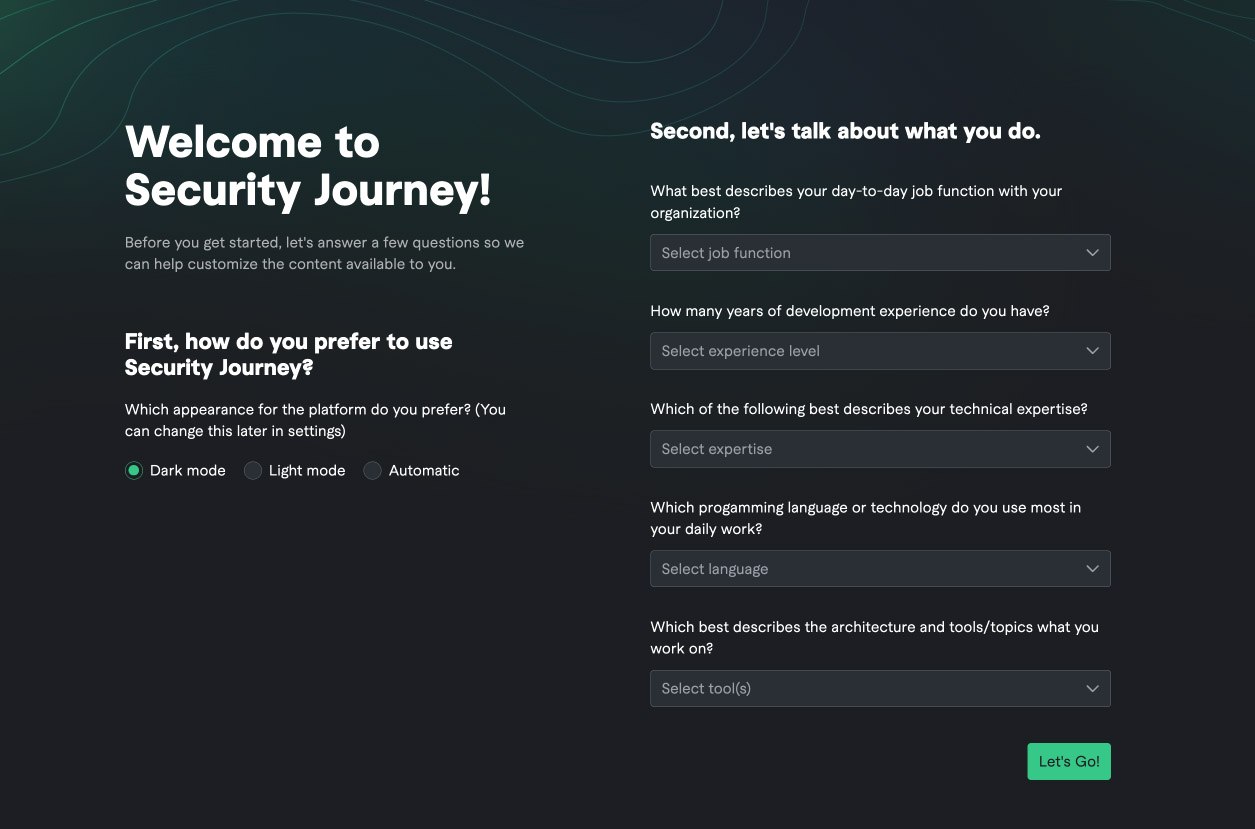
Learner Profile
Train learners based on who they are and what they build.
Learner Profiles help you account for:
-
Experience and background
-
Languages, frameworks, and platforms
-
Responsibilities, tools, and security exposure
This ensures training is practical, targeted, and applied where it matters.
Developer Security Knowledge Assessments
Understand what developers know and where training is needed.
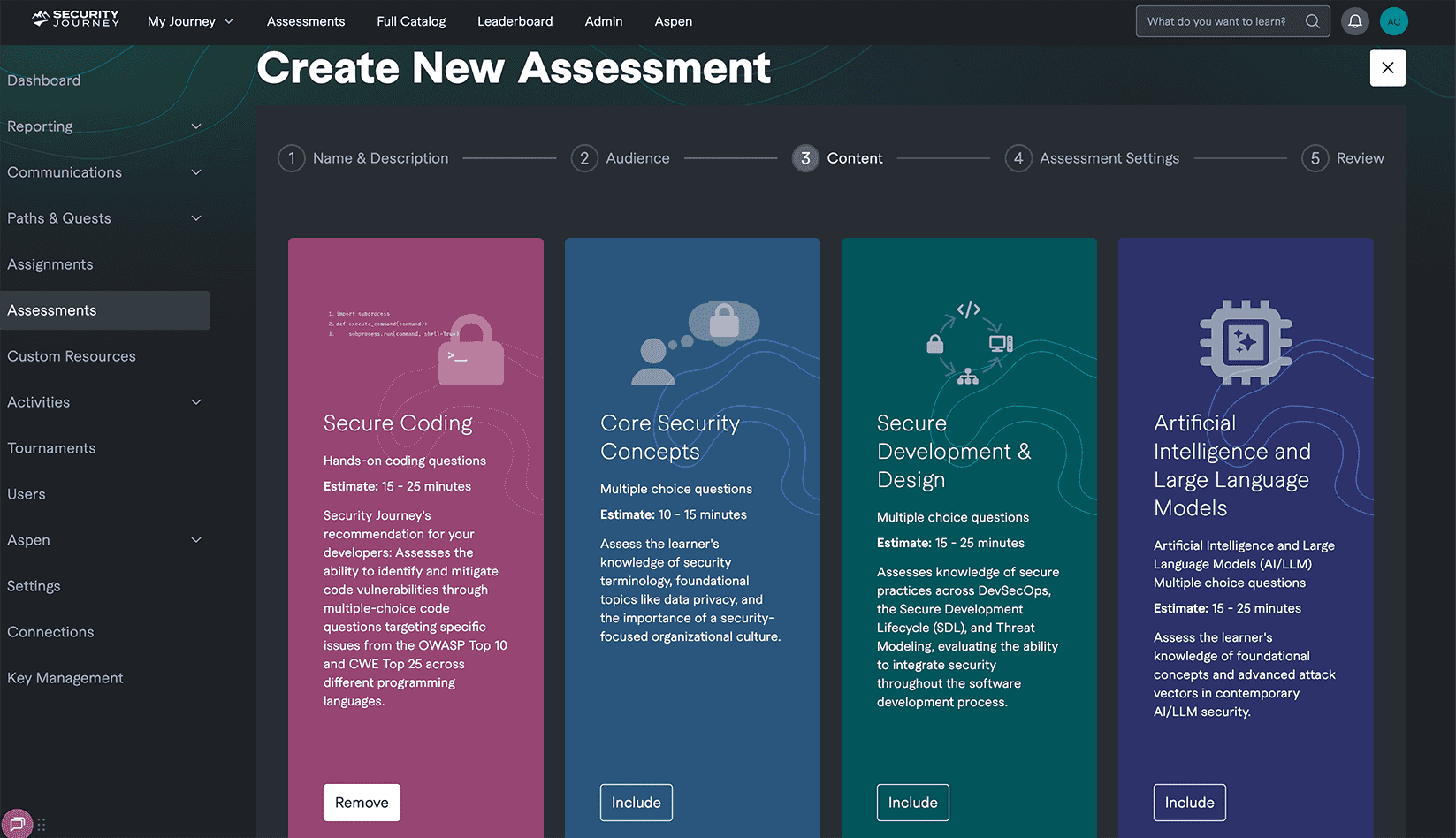
Developer Security Knowledge Assessments help you:
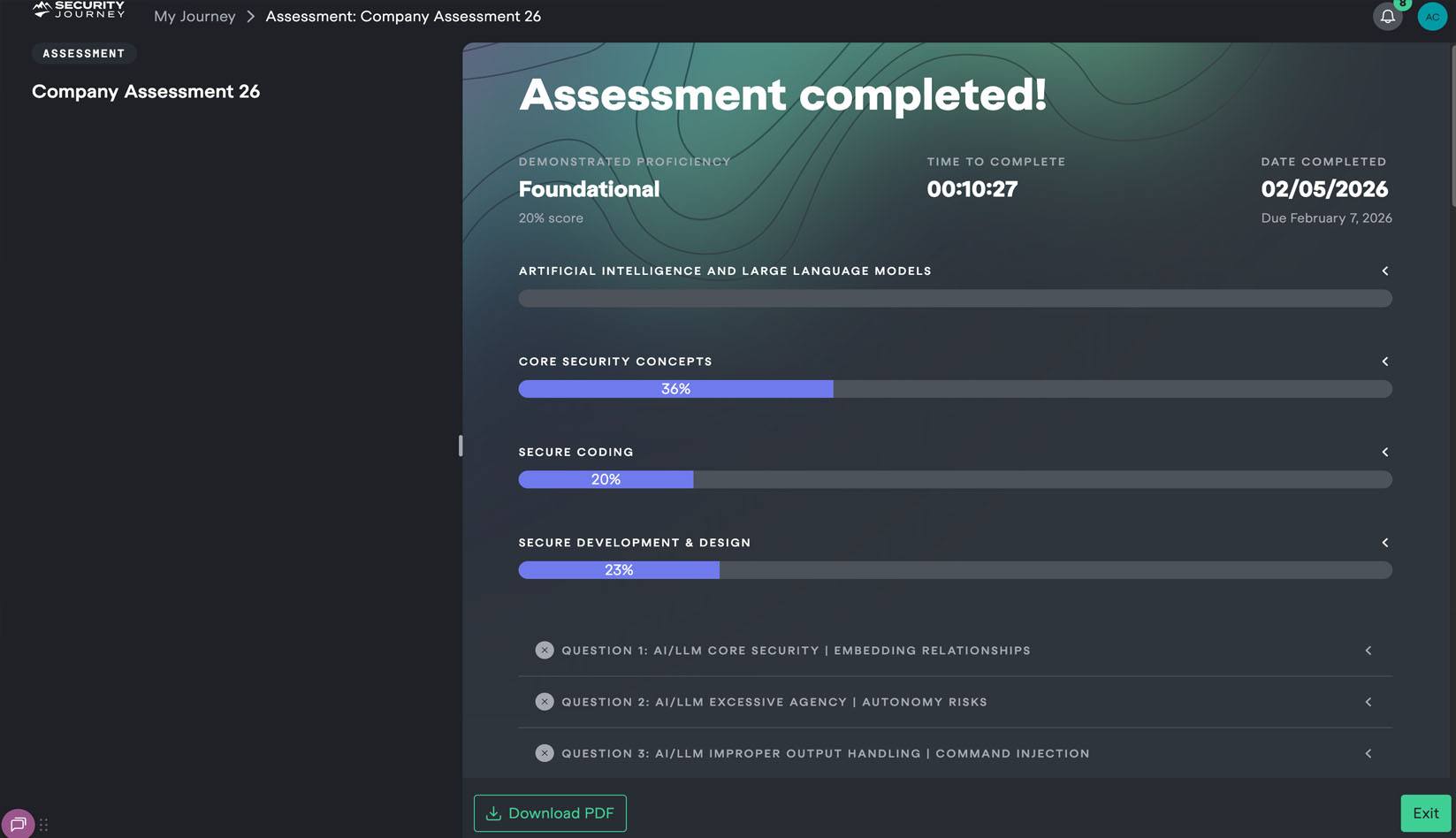
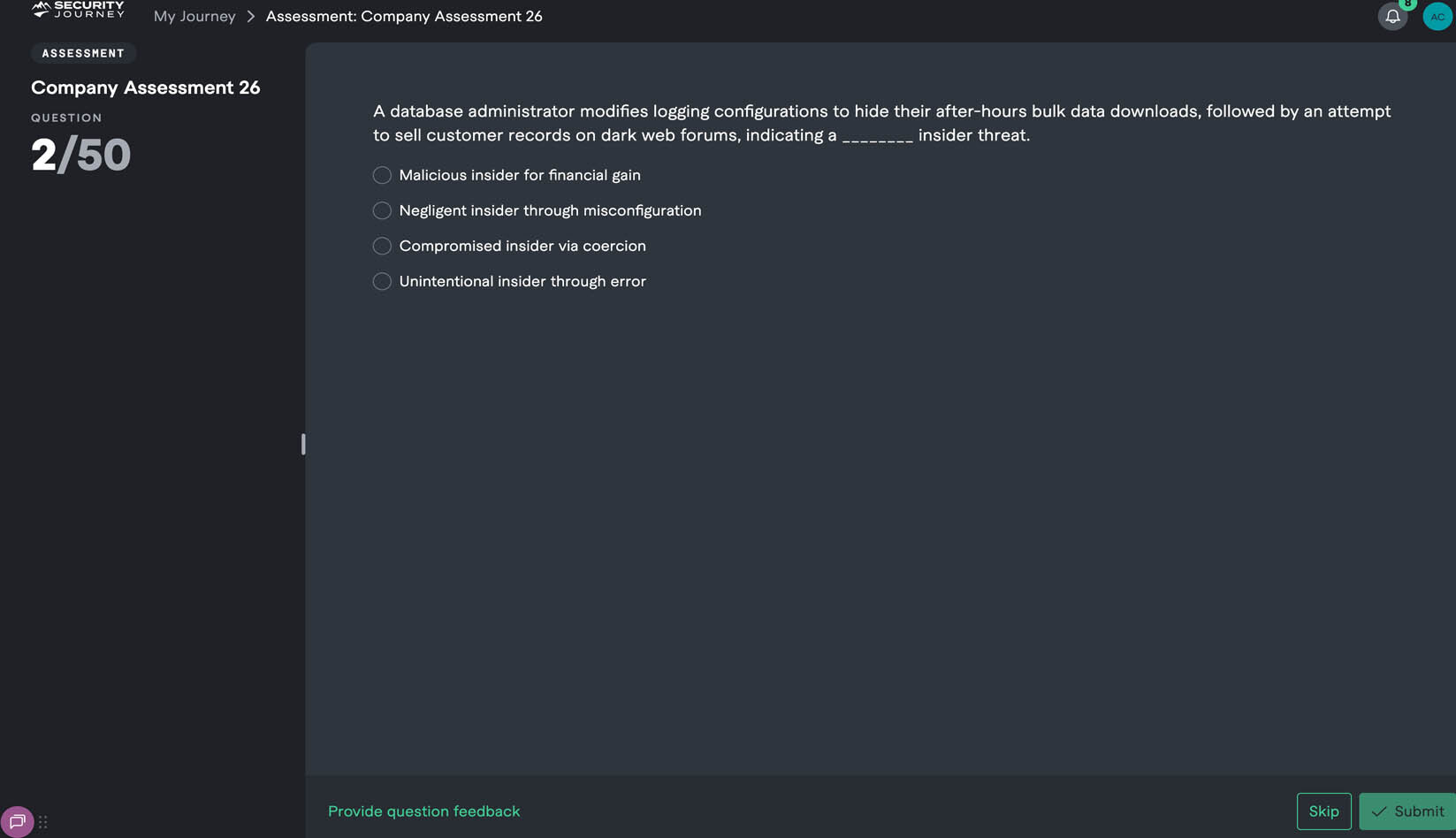
- Establish a security knowledge baseline and identify gaps across individuals and teams across multiple topic areas
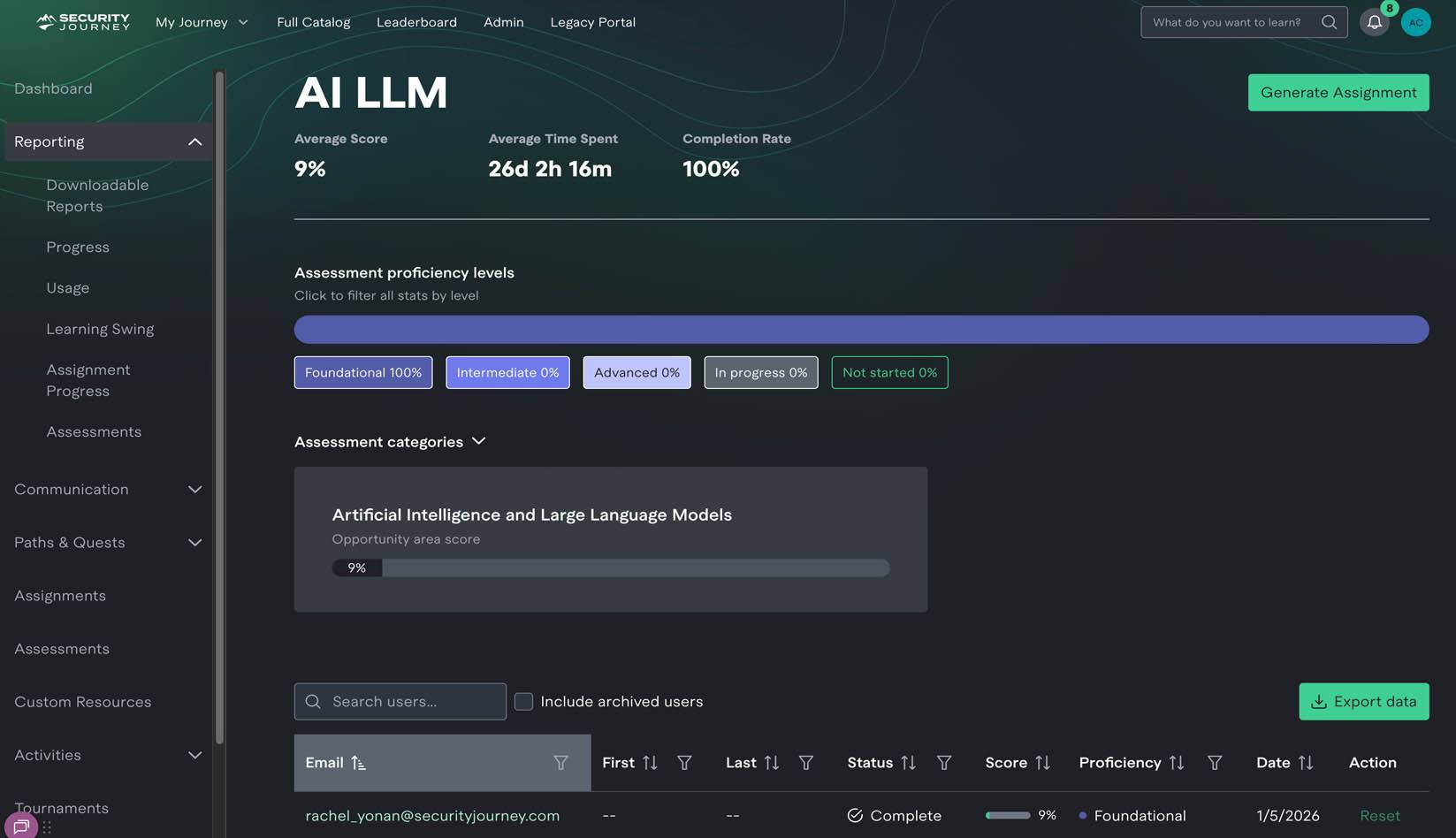
- Measure progress over time to understand where training is making an impact with individual scores, proficiency levels, team-level dashboards, and exportable data to track progress and guide training decisions.
- Streamline the learning experience by allowing developers to test out of content they already know
Assess Knowledge Across Four Key Areas
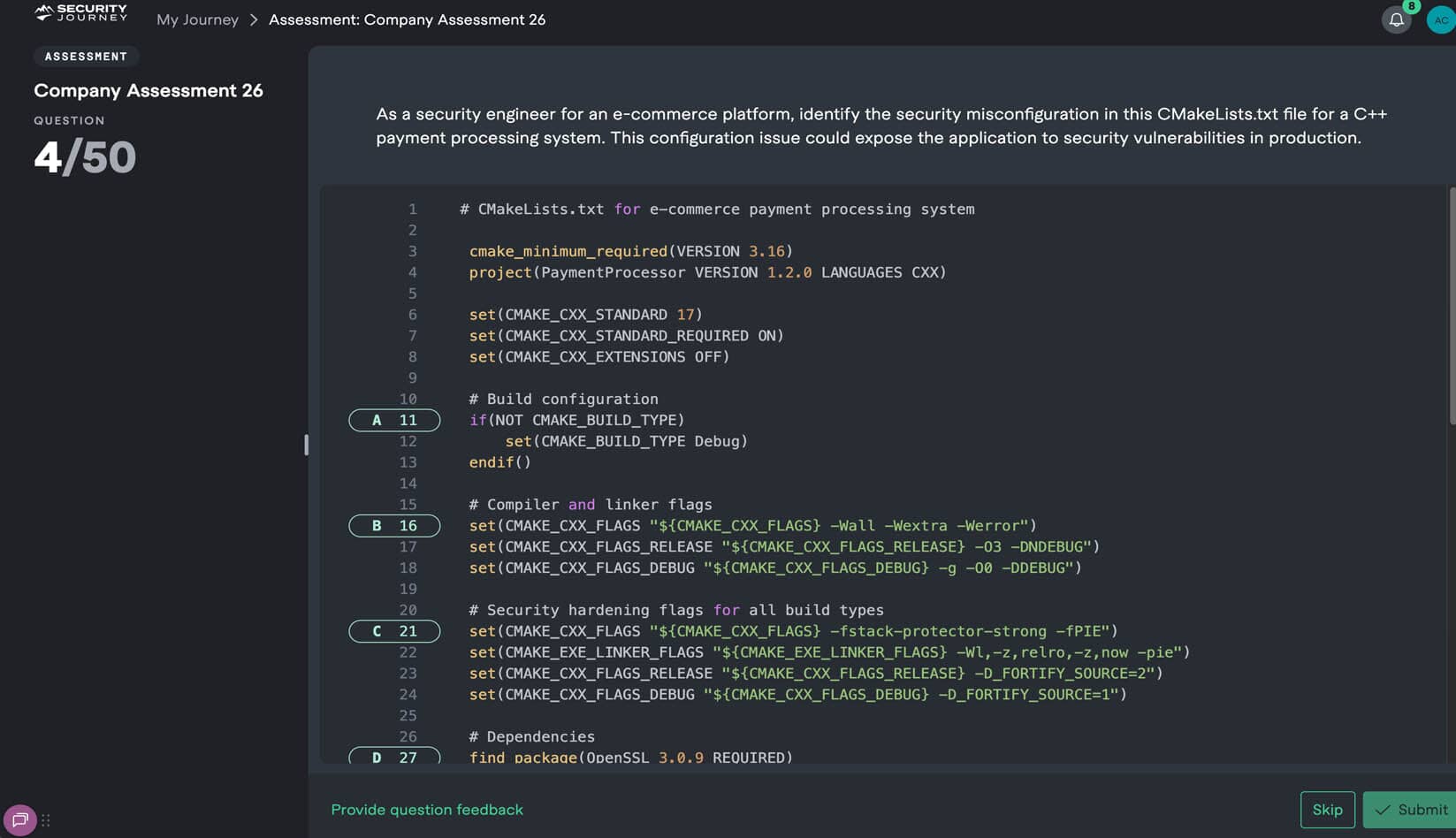
Assesses the ability to identify and mitigate code vulnerabilities through questions targeting specific issues from the OWASP Top 10 and CWE Top 25 across different programming languages.
Topics Assessed:
- CWE Top 25
- OWASP Top 10
There are three types of interactive coding questions in Secure Coding Assessments:
-
Identify the line of code that will secure the vulnerable line
-
Identify the block of code that creates a vulnerability
-
Identify which line of code makes the code vulnerable
Assesses knowledge of secure practices across DevSecOps, the Secure Development Lifecycle (SDL), and Threat Modeling, evaluating the ability to integrate security throughout the software development process.
Focuses on:
- DevSecOps
- Secure Development Lifecycle
- Threat Modeling
Assess the learner's knowledge of security terminology, foundational topics like data privacy, and the importance of a security-focused organizational culture.
Topics Assessed:
-
Basic Terms
-
Fundamental Security Topics
-
Organizational Security Culture
Assess the learner's knowledge of foundational concepts and advanced attack vectors in contemporary AI/LLM security.
-
AI & Secure Coding
-
Risks & Vulnerabilities
-
Governance & Responsible Use
-
Developer Readiness
Aspen: Adapt
Turn real security findings into targeted secure coding training
Whether findings come from CI/CD pipelines, security scanners, or GitHub activity, Aspen: Adapt creates a direct connection between real‑world risk and meaningful skill reinforcement.
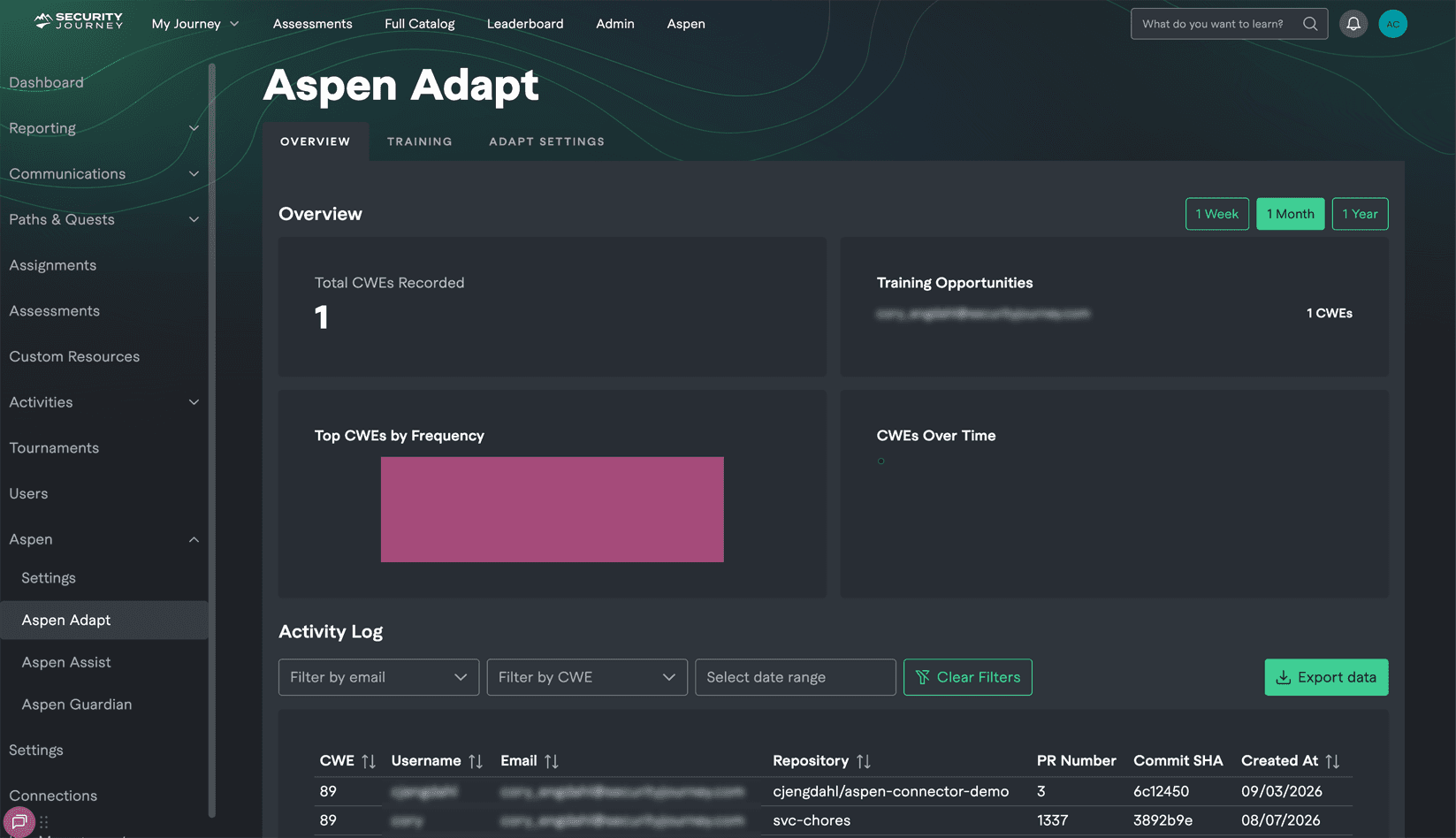
Ingest findings from anywhere
Key capabilities include support for multiple tools and pipelines, no requirement for source‑control integrations, and compatibility with customized or enterprise‑scale workflows.