Skip to content
SJ_Human1920x1280_002_web

Announcing Aspen: Guardian AI

Proactive Security Guidance for AI-Generated Code


Auto-create rules from real scanner findings to reduce repeat vulnerabilities.

SJ_Human1920x1280_004_web

Modern AI Development Requires New Rules.

AI Can Write Code. It Can’t Make Decisions. Your Developers Can.


Developers who know how to use AI intentionally move faster and safer. See how structured workflows turn AI into a force multiplier.


New Learning Path Live Now 

SJ_Human1920x1280_003_web

WEBINAR

AI is Here.

Your Developers Aren’t Ready—Yet.  


Live Webinar | January 21 | 1 PM ET  


If AI adoption is inevitable, why is developer readiness still optional? 

Turn Developer Insight into Secure Development at Scale

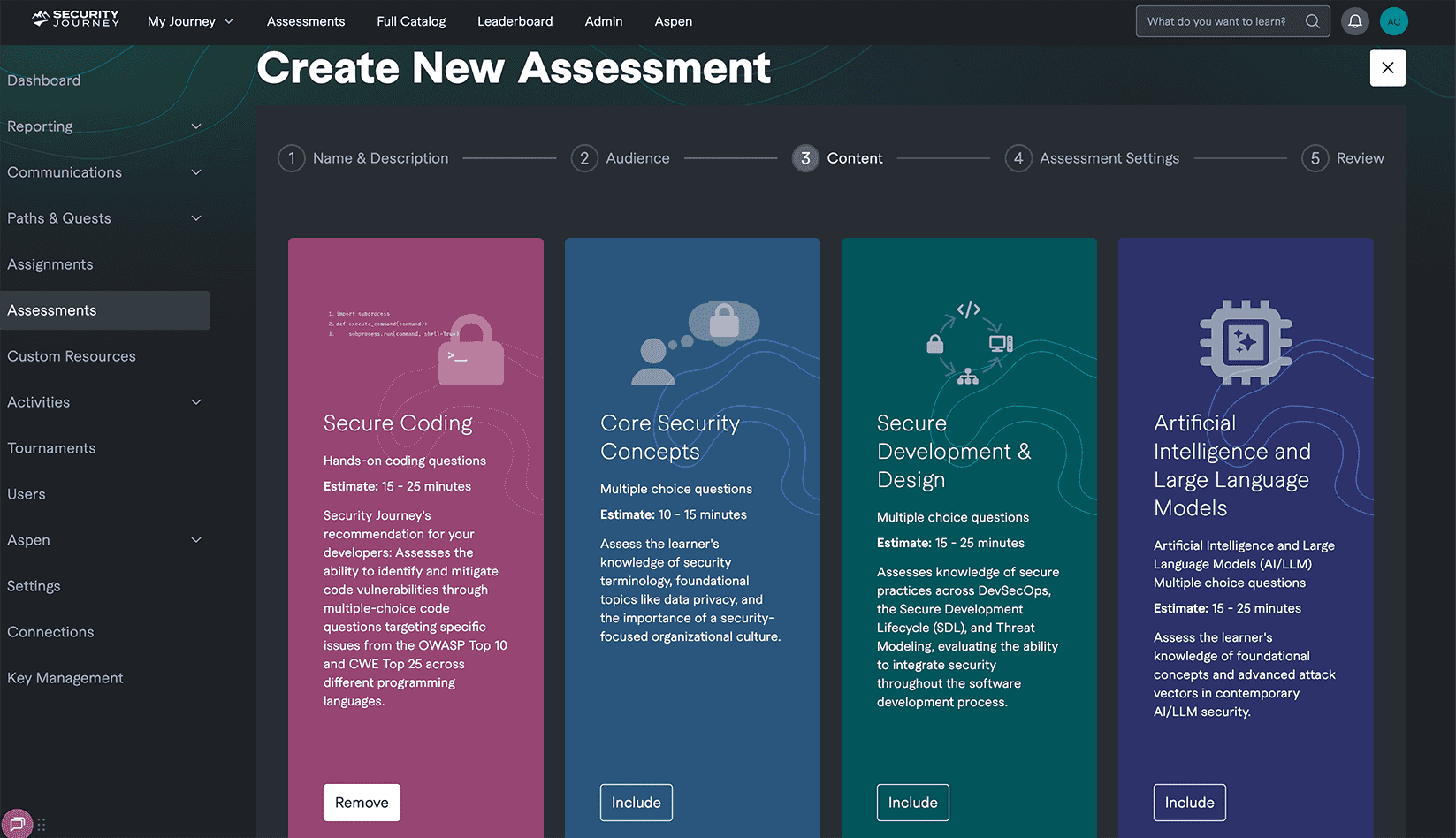
SecurityJourneyPlatform_Assessment26

Understand Your Developer's Needs

Gain clear visibility into your development team’s experience, security knowledge, and real-world coding behavior. By understanding where your developers are today, you can focus secure code training where it matters most.

Includes:

  • Developer Profiles

  • Security Knowledge Assessments

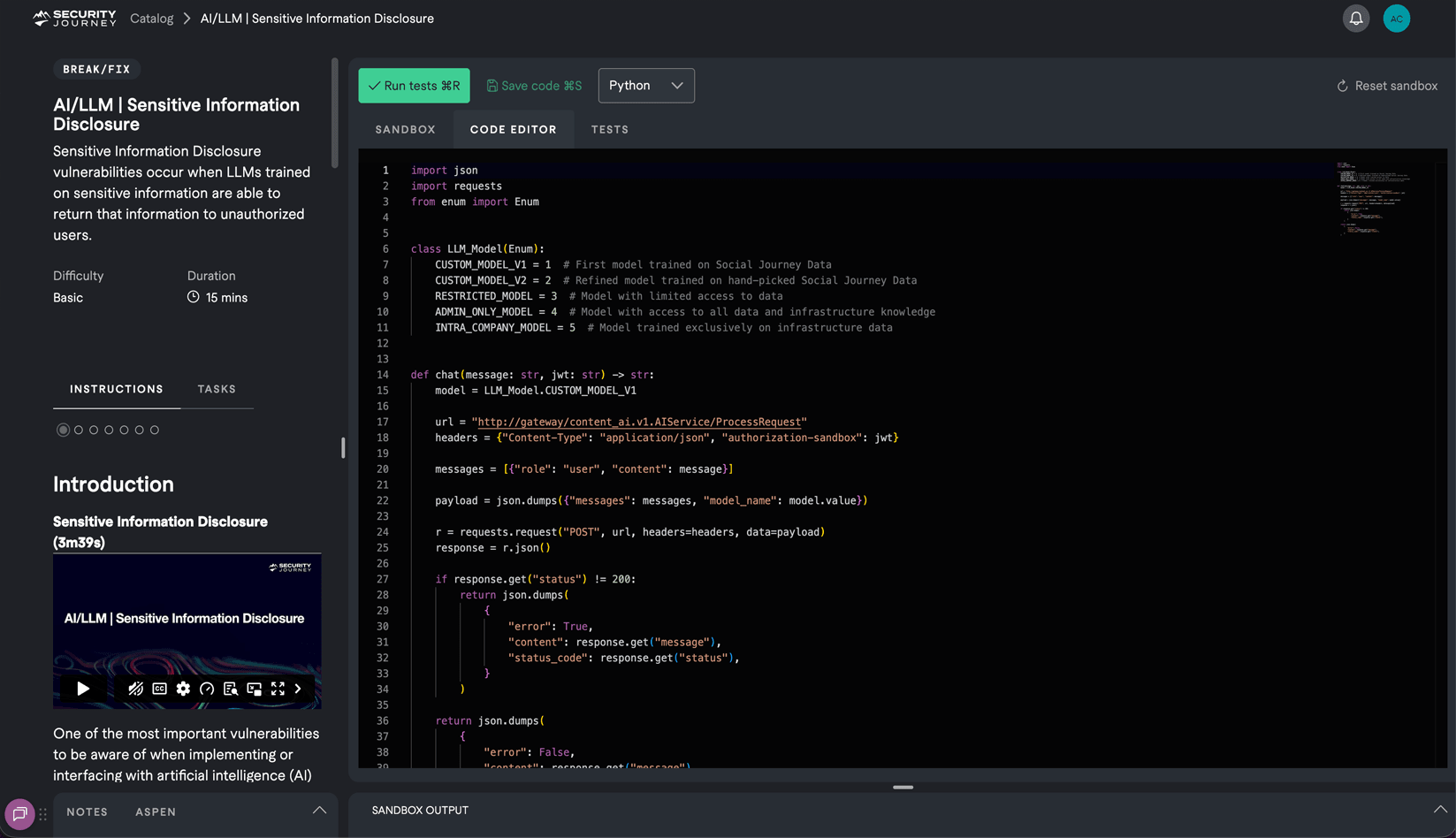
Security Journey Platform Hands-On Training

Deliver the Right Secure Code Training at the Right Time 

Move beyond one-size-fits-all training. Create targeted learning paths or use pre-built paths— that combine foundational concepts with hands-on practice across topics such as OWASP Top 10, AI/LLM vulnerabilities, and secure development fundamentals.

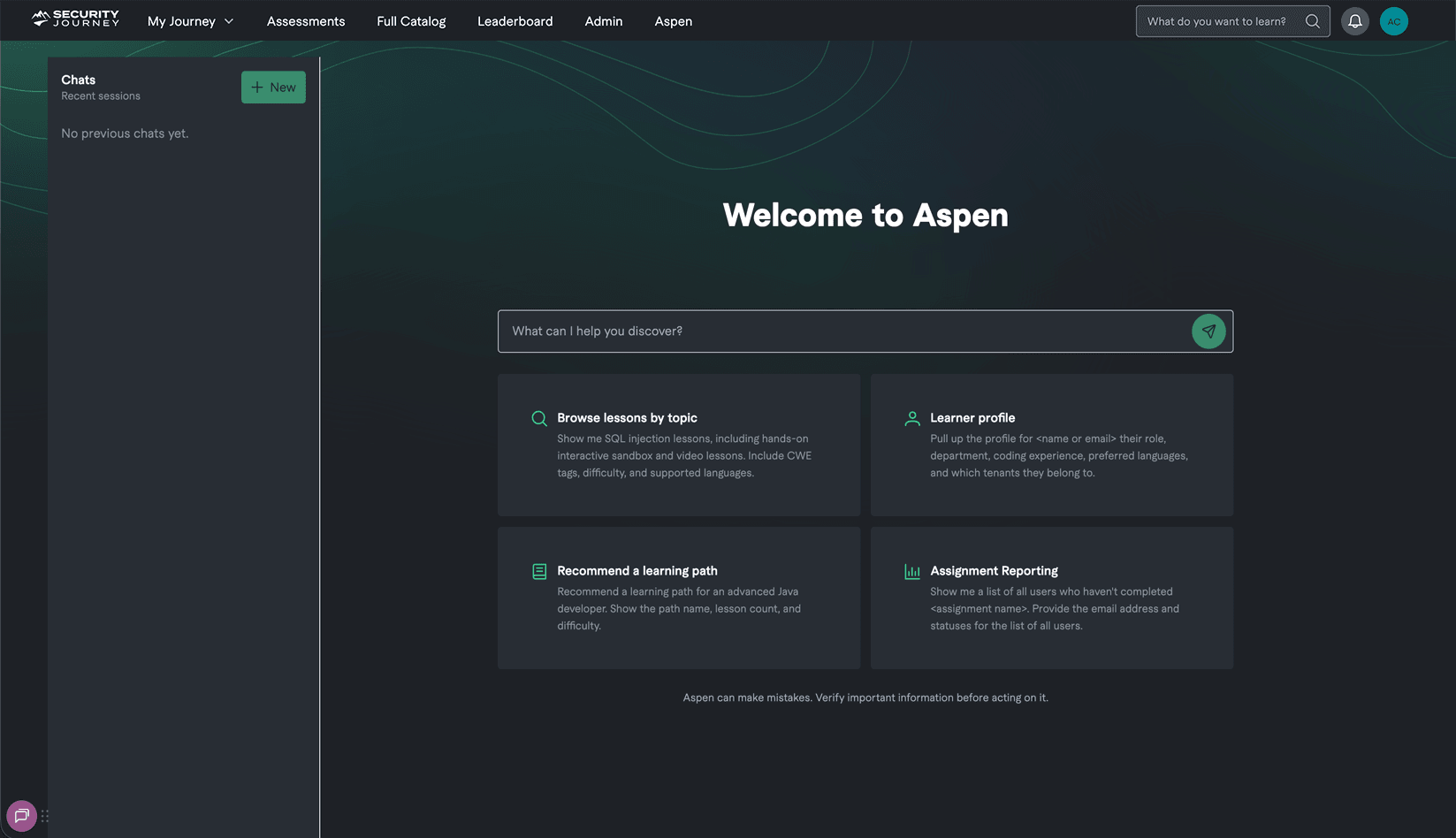
Security Journey Platform AI Training

Build Proactive Guardrails Into AI-Assisted Development

Aspen: Guardian AI turns real security findings into actionable guidance within AI coding tools — helping developers avoid repeating insecure patterns before they ship. 
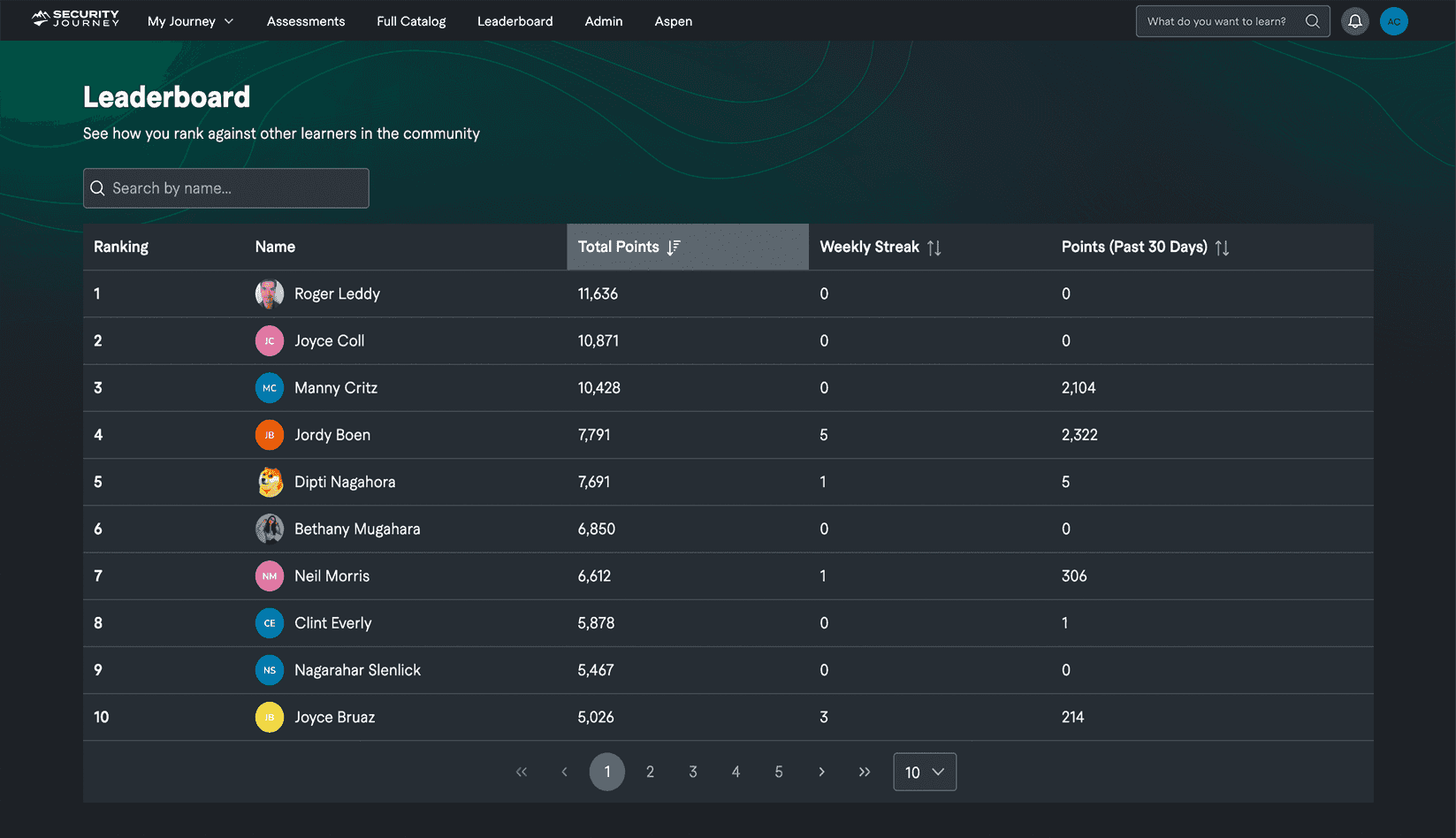
Security Journey Platform Leaderboard

Engage Developers and Reinforce Secure Coding Behaviors

Security only works when developers stay engaged. Drive participation and long-term behavior change through tournaments, leaderboards, certifications, and structured Security Champion development. 
Security Journey Platform Reporting

Administer, Measure, and Prove Impact — Without Friction

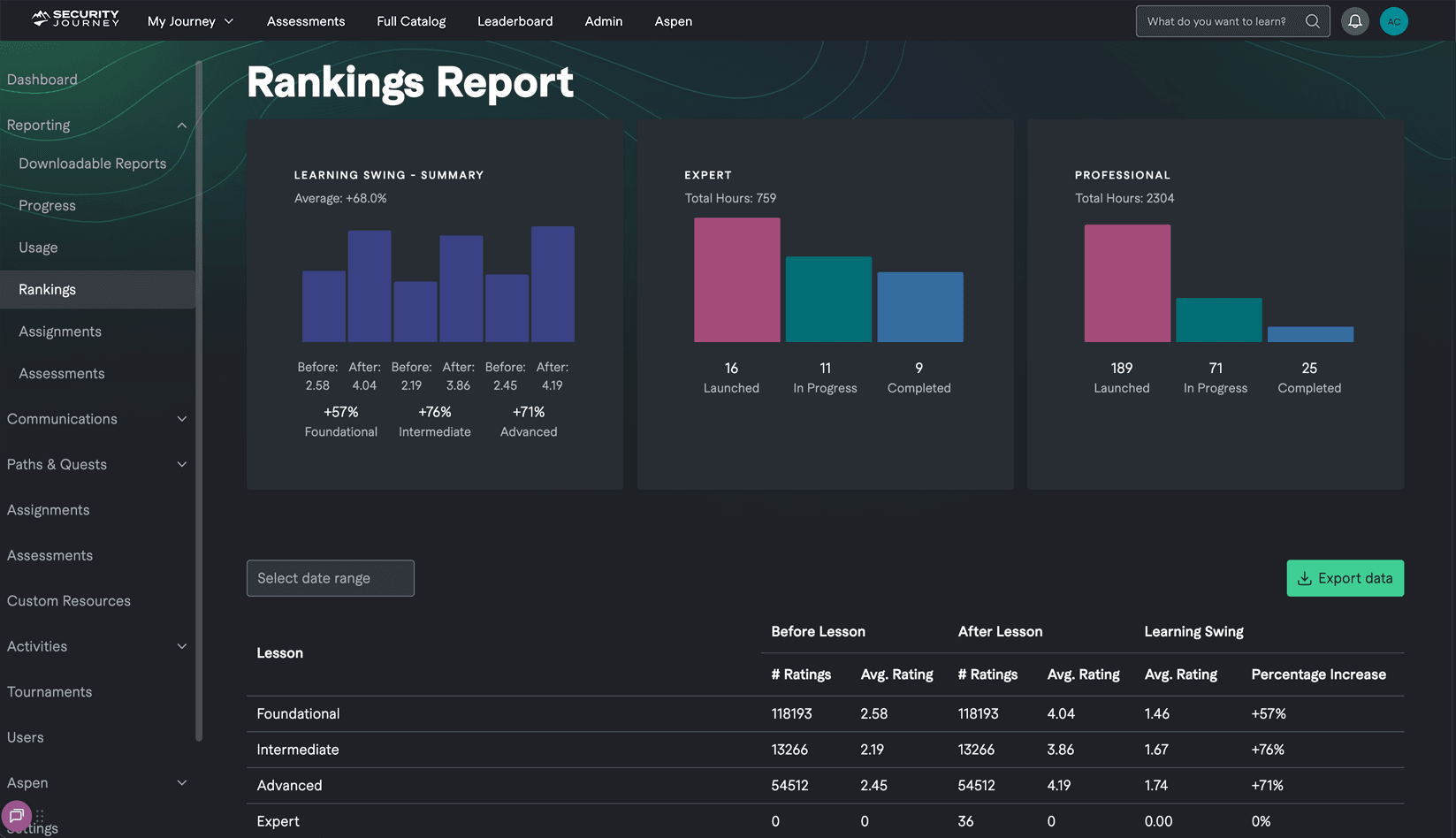
Easily manage learners, automate assignments, and track progress across teams. Measure training effectiveness, compliance, and developer growth with reporting designed for security and leadership teams alike. 
Zoom Logo Security Journey Zoom Case Study

Security Journey Case Study

Zoom Selects Security Journey to Drive Application Security Excellence

Zoom needed a new secure coding training partner for their fast-growing engineering team to support new features, integrations, and capabilities.

Security Journey's AppSec Education Platform was implemented to support secure coding practices with required learning paths for new engineers and custom yearly training refreshers.

Zoom saw an immediate return on investment when developers proactively returned to previously completed code and addressed vulnerabilities based on what they learned in their training.

Who Can Use Security Journey's AppSec Education Platform?

When everyone in the SDLC has a solid understanding of security principles, the entire team can adopt a security-first mindset.

Security Journey Customer Success

We're Here to Help

Every Security Journey customer has access to:

  • An experienced Customer Success Manager

  • Unique In-App support for both Admins and Learners
  • Our extensive up-to-date knowledge base
  • Best practices and resources for engaging Learners
  • Security Champion and mentor guidance

Read Our Top AppSec Articles

What Makes Security Journey Hands-On Training Different?

What Makes Security Journey Hands-On Training Different?

Discover what makes Security Journey different from other hands-on training platforms. 
Read The Article
How To Use Implicit Gamification For AppSec Training

How To Use Implicit Gamification For AppSec Training

Gamification is more about understanding human motivations that drive us to play games to apply these techniques in other areas of life. 
Read The Article
How to Integrate Role-Based Developer Training into Your AppSec Program

How to Integrate Role-Based Developer Training into Your AppSec Program

Let's dive into role-based training and how to use those principles for developer training and AppSec programs. 
Read The Article
Development vs. Security: Make It Stop

Development vs. Security: Make It Stop

We are currently in an application security dilemma that costs organizations millions of dollars annually. 
Read The Article
Security Journey Security Champions Podcast

The Security Champions Podcast

Gain exclusive insight from software development leaders and security experts – from recounting their security champion journey to diving into the latest headlines in the AppSec world. 
Security Journey SQL Injection

Try a Lesson - SQL Injection

Before diving into the hands-on portion of this lesson, we will start with some background information on Injection, SQL Injection, and SQL Syntax.

Frequently Asked Questions

What Is Secure Coding Training?

Secure coding training focuses on teaching developers how to create software designed with security in mind rather than trying to patch vulnerabilities after they have been discovered. The most effective programs blend concise, practical lessons with hands-on labs that simulate full applications and not just code snippets.


Developers learn to find and fix vulnerabilities in realistic environments, gaining skills they can apply immediately. A strong secure development culture starts by embedding secure coding practices early in the development lifecycle.
Security Journey's Secure Code Training personalizes learning by role and experience level, updating lessons monthly to reflect new frameworks and threat trends. It aligns content with standards such as PCI-DSS 4.0,, and NIST SSDF, ensuring relevance and compliance. This secure coding education is a foundational component of any modern AppSec program.


Teams that can adopt this approach tend to reduce vulnerabilities, shorten remediation cycles, and create a proactive security culture that makes all the difference. To explore real examples, visit the AppSec training library and consider joining Security Journey’s Secure Code Training for easy-to-digest lessons that would pave the way to building safer applications and grow a reliable pipeline of security champions. Creating a security first mindset across teams helps protect against evolving threats and strengthens long-term outcomes. 

What Should I Look For in a Secure Coding Training Platform?

When evaluating a platform, look for features that build lasting behavior change:

  •       Hands-on labs with complete application environments, not isolated code snippets.
  •       Role-based, leveled learning paths tailored to developer experience and stack.
  •       Assessments that benchmark skills, recommend lessons, and track improvement.
  •       Enterprise support, including SSO/SAML, SCORM/LMS, APIs, and reporting dashboards.
  •       Regular updates aligned with the OWASP Top 10 and emerging threats.

A comprehensive suite of training tools enhances adoption and long-term program effectiveness. A strong vendor supports a program rollout with human guidance, evident milestones, and internal security champions. You should also request demos showing how labs map to your tech stack and how dashboards connect learning data to reduced vulnerabilities. Providing students with interactive environments encourages learning and long-term retention. A platform that combines measurable progress, scalability, and human support turns training into a true security transformation. The ability to assess individual and team-wide progress is key to ongoing performance.

How Long Does Secure Coding Training Take to Complete?

Effective secure coding training is continuous because technology and threats constantly evolve. Most organizations schedule around 12 hours per developer per year, delivered in short 15-minute lessons that fit into existing sprints. To stay ahead of attackers, organizations must prioritize continuous learning and adaptation.


A typical rollout starts with 4–8 hours of foundational training, followed by monthly refreshers and targeted labs tied to new frameworks or vulnerabilities. Security Journey structures learning paths from Foundational to Intermediate and then to Advanced, with monthly content updates and analytics that track progress. For development teams looking to improve quality and reduce risk, secure software development must become a daily habit.


The goal isn't to just finish training, but to embed security awareness into everyday development. Consistency matters more than intensity—small, regular practice leads to stronger retention and measurable improvement in code quality.

What Are the Best Secure Coding Training Platforms in 2025?

In 2025, leading developer-focused platforms include Security Journey, Secure Code Warrior, SecureFlag, and Veracode. The main differentiators are the realism of labs, role-based personalization, assessment depth, and enterprise integration. These platforms give professionals secure access to tailored content mapped to real-world risks.

Security Journey stands out with full-application sandboxes, Developer Security Knowledge Assessments, and the Security Champion Passport program that reinforces culture and skill retention. Its customers, including Zoom, report faster remediation and proactive vulnerability prevention. Integrating techniques such as threat modeling into lessons gives developers a deeper security perspective.


When comparing vendors, always ask to see:

  •       A sample lab in your programming language.
  •       An assessment report showing skill baselines.
  •       A dashboard connecting training metrics to vulnerability trends.

The platforms that demonstrate clear, measurable risk reduction and not just compliance are the ones worth investing in.

Does Secure Coding Training Meet PCI DSS 4.0 Requirements?

Yes, Security Journey’s Secure Code Training. PCI DSS v4.0 Requirements 6.2.2–6.2.4 require developers to receive annual, practical secure coding training. Organizations must show evidence of skill development, not just attendance. Security Journey’s certifications help prove compliance and developer readiness through formal documentation.


Security Journey offers a PCI Compliance Learning Path covering OWASP Top 10 topics, threat modeling, and secure design, with certificates and reporting suitable for audits. Assessments validate that developers understand and can apply security principles. This proves that secure software development is more than just a checkbox—it’s an active process.


The platform's dashboards and exportable data simplify compliance tracking, while monthly refreshers keep knowledge current. This ensures readiness year-round, not just before audits.

How Do I Get Developers to Complete Secure Coding Training?

Developers engage when training is relevant, short, and interactive. When selecting a secure coding training platform, focus on elements that drive meaningful outcomes for developers. Practical, hands-on labs featuring complete application environments enable learners to tackle security challenges in realistic scenarios, fostering a deeper understanding than isolated code exercises. Aligning training with application security goals creates synergy between engineering and security objectives.


Learning paths should align closely with individual roles, experience levels, and technology stacks, ensuring relevance and engagement. Assessments play a critical role: they should benchmark proficiency, offer targeted recommendations for improvement, and facilitate progress tracking. The right program helps close the gap between theoretical knowledge and practical implementation.


Enterprise readiness is equally important, encompassing support for SSO/SAML, SCORM/LMS compatibility, APIs for system integration, and administrative dashboards for monitoring engagement and outcomes. Regular content updates synchronized with industry standards like the OWASP Top 10 and emerging threats ensure training remains current and effective. Ultimately, these programs empower developers to protect both the organization and its users. This combination equips developers with applicable security skills tailored to their contexts, supported by robust tools for organizational implementation and growth. Organizations that achieve high completion rates report fewer incidents and stronger code quality. 


Security Journey's approach supports buildingSecurity Champions who mentor peers, fostering intrinsic motivation and peer accountability. Developers complete training because it helps them code faster, fix issues earlier, and earn recognition for improving security quality.

What Topics Are Covered in Secure Coding Training?

Comprehensive programs cover the OWASP Top 10, CWE Top 25, and security practices for more than 45 technology stacks.


Typical topics include:

  •       Input validation, API security, and dependency management.
  •       Logging, monitoring, and incident response.
  •       Threat modeling and secure design.
  •       Authentication, session management, and cryptography basics.
  •       Cloud, container, and Kubernetes security.

Security Journey offers 800+ lessons combining hands-on labs and theory, with monthly updates that reflect current threats like API abuse and LLM-related risks. Labs map directly to common vulnerabilities, ensuring that time spent learning leads to fewer issues in production.

How Do We Measure the Effectiveness of Secure Coding Training?

Measure both learning progress and real-world results. Start with a baseline assessment, then track metrics such as having fewer high-severity findings in code scans, faster time to remediate vulnerabilities, and improved security scores and compliance readiness.


Security Journey's Developer Security Knowledge Assessments benchmark four domains—Secure Coding, Secure Development, AI-LLM, and Core Security—and visualize progress through dashboards. Reporting correlates training completion with vulnerability reduction, giving CISOs and VPs of Engineering tangible ROI proof.


Quarterly reviews of these metrics help align learning goals with AppSec objectives, proving that secure coding training drives measurable risk reduction.

Can Secure Coding Training Integrate With Our Existing Tools?

Yes, of course! Enterprise-ready platforms should support SSO/SAML, SCORM/xAPI, and APIs for automation. These features enable single sign-on, seamless LMS tracking, Security Journey integrates with existing LMS, SSO, and development tools so training fits naturally into workflows. Admin features like user provisioning, reminders, and reporting dashboards make management simple. Run a small pilot to validate integration, then scale with confidence. To get top tier setup guidance, contact our team for more information.